In this article
An education opportunity can be attractive and still require careful reading. The subject, format, workload, eligibility and expenses all affect whether it fits a person’s goals. A public overview is a useful beginning, not the entire decision. This article provides questions to investigate and does not recommend a particular enrollment, financing arrangement or degree for an individual.
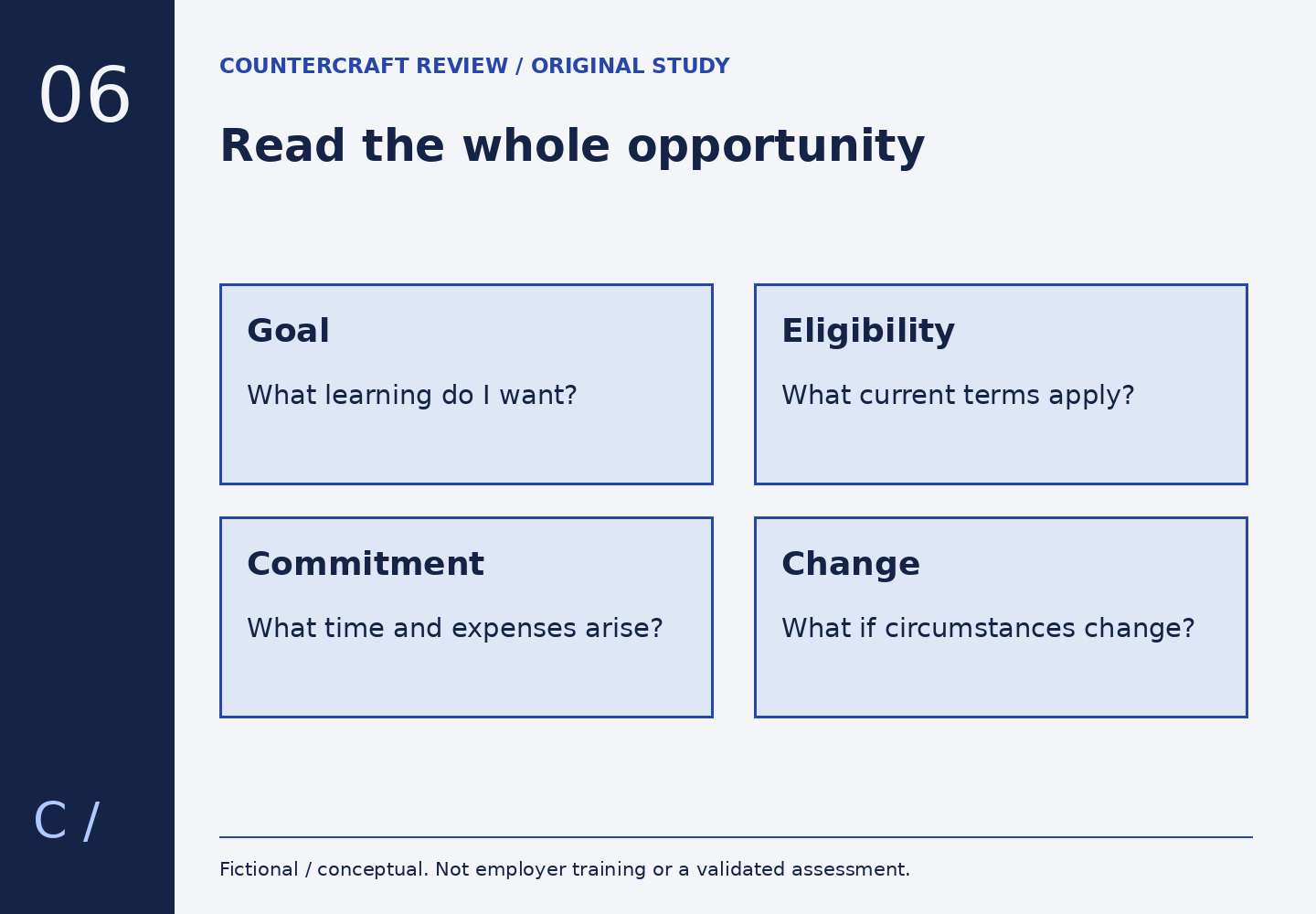
Separate the program from your eligibility
Starbucks’ public education page describes the Starbucks College Achievement Plan with Arizona State University. That establishes the existence and broad purpose of the program. It does not verify a particular reader’s employment status, eligibility, admissions position or current benefit terms. A person can be interested in a program before those questions are resolved.
The ASU FAQ headings identify issues including eligibility, course load, time commitment and changes in employment status. In this source review, expanded answers were not fully available. We therefore use the page as a map of questions, not as evidence for a specific eligibility rule or promise of coverage. Obtain the current authoritative answer from the program before acting.
Define the educational goal
A goal such as “study something useful” is difficult to evaluate. Ask what you hope the learning will make possible: a subject you want to understand, a requirement for a future role or a longer-term academic objective. Then compare the curriculum and credential with that goal. Interest and relevance both deserve attention.
In a fictional example, a reader enjoys explaining information and is exploring several fields. The next step is to compare actual course content and speak with the appropriate academic adviser, not to assume that any communication-related degree leads to a particular job. This publication does not predict admissions, graduation or employment outcomes.
Ask about the whole commitment
Tuition language does not answer every cost question. Books, equipment, fees, timing, academic requirements and possible changes in circumstances may need clarification. Do not infer that every expense is covered because a headline describes tuition support. Use current program documents and qualified advice for individual financial or tax questions.
Workload also extends beyond scheduled instruction. Reading, assignments, assessments and support appointments may require different kinds of time. Ask the program about its expectations and compare them with realistic commitments. A flexible online format does not mean that all work can be done in any spare minute or that deadlines disappear.
Read change conditions before you need them
A person’s course load, employment or personal circumstances can change. Ask what the program requires when that happens and where the current terms are recorded. It is easier to evaluate an opportunity when you understand both entry conditions and what follows a change. Do not rely on an old forum answer or an outdated program PDF for a current decision.
This article intentionally avoids repeating a degree count or a detailed benefit threshold from public marketing pages. Such details can differ across pages and change over time. The appropriate question is which current document controls the decision you are making, not which search result has the most appealing number.
Leave with an unanswered-question list
Before making a commitment, identify what is established, what is still unknown and who can answer each item. A program adviser may address curriculum or admissions; the authorized benefits contact may address employment-related eligibility. Those responsibilities should not be collapsed into an answer from an independent editorial site.
You can use the career-conversation guide to discuss how education relates to your goals without asking another person to promise a promotion. A good research outcome may be a decision to continue exploring, to wait or to choose a different route. The important point is that the choice rests on current terms and a realistic understanding of the commitment.
Sources and limits
Starbucks Careers: Education. Starbucks College Achievement Plan: Frequently Asked Questions. Public material checked October 8, 2026. Fictional examples and practice structures are original editorial work. They are not employer training, an assessment credential or a promise of a career outcome.