In this article
A task belongs to a particular setting; a skill can sometimes be useful in another. Taking a request, checking a detail or explaining an option may involve capabilities that appear across many jobs. The challenge is to name the capability without stripping away the evidence that makes the claim credible. “Excellent people skills” is broad. A precise description of what you actually did is more useful.
Start with an action you can describe
Use a real experience only if you can discuss it appropriately and without private information. For this article, the example is invented: a volunteer at a public event clarified incomplete supply requests before passing them to the organizer. The observable action is clarifying missing details. Possible skill language includes active listening, written communication and organizing information.
Those labels do not automatically prove high proficiency. They help describe the action. O*NET’s barista occupation page provides task and skill vocabulary that readers can use as a reference. It is an occupational description, not an assessment of the reader, a résumé endorsement or an exact Starbucks role specification.
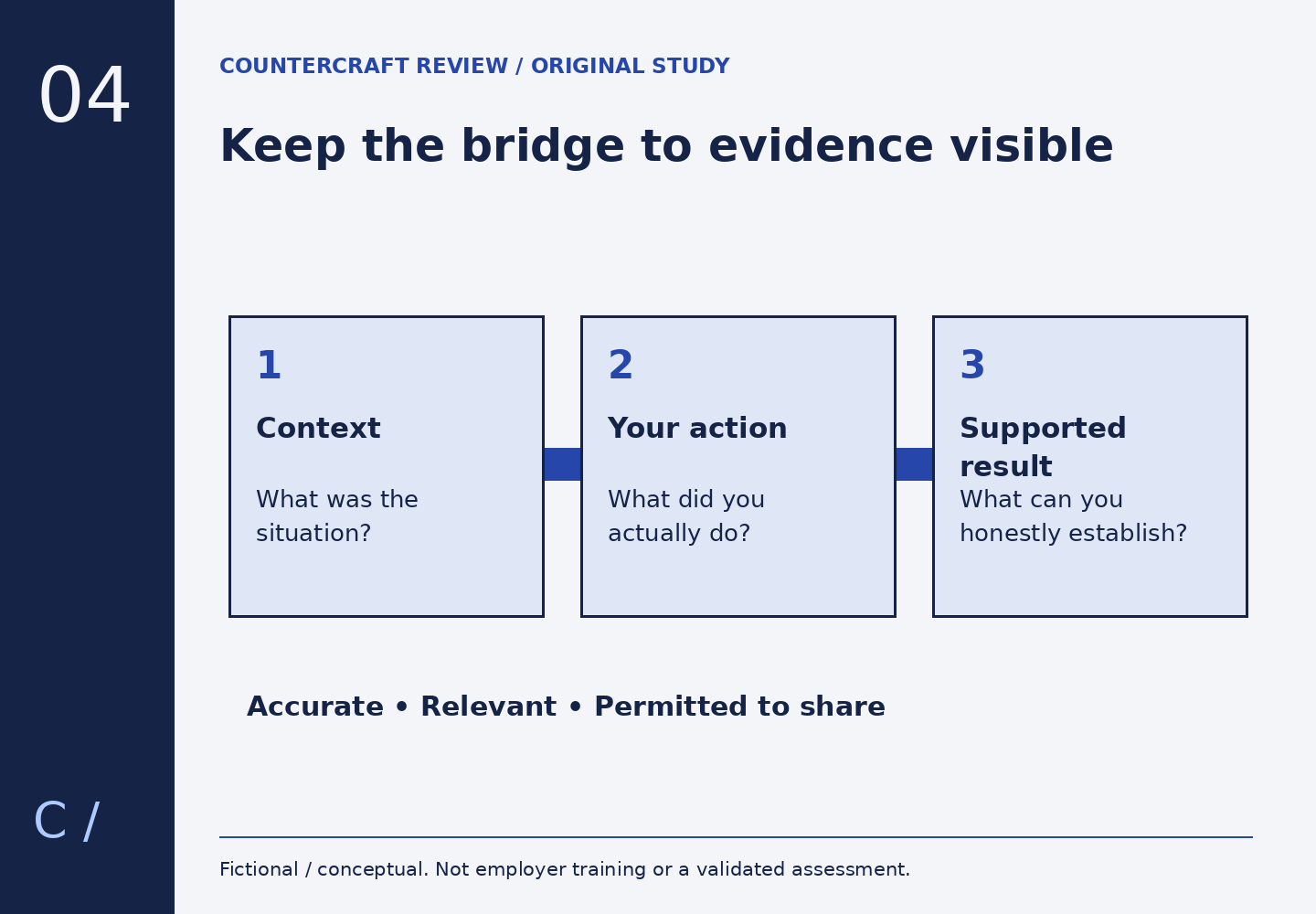
Build a bridge in three parts
The first part is the context, stated briefly and without confidential detail. The second is the action you personally took. The third is the result you can honestly support. In the fictional example: an event needed clear supply requests; the volunteer checked missing quantities and timing; the organizer received requests containing the required details.
Do not add a percentage improvement, customer-satisfaction score or business outcome unless it is genuinely known and appropriate to disclose. A precise qualitative result is better than a fabricated number. Likewise, distinguish an individual contribution from a team outcome. “Helped prepare” and “led” are different claims.
Translate without erasing the setting
Someone outside service work may not know the meaning of a local task label. Explain the underlying action in plain language. Avoid replacing every concrete word with an abstract phrase that sounds impressive but says little. The reader should still be able to understand what happened and why it required judgment.
For the invented volunteer, “resolved incomplete requests by confirming missing quantities and deadlines” is clearer than “leveraged cross-functional stakeholder alignment.” The first sentence can be questioned and understood. It also leaves room to acknowledge the limit: the volunteer did not control purchasing or make the final allocation decision.
Compare the receiving role carefully
Transferability is not sameness. A communication skill may be relevant in another field while the technical knowledge, regulations, systems or authority differ. Read the actual role requirements and identify which parts of your experience connect. Do not assume that a shared skill word makes two jobs interchangeable.
A service worker may have experience prioritizing tasks, but a regulated profession may require a license, formal education or supervised practice. This publication does not certify eligibility for any role. Use the skill comparison to identify relevant experience and learning gaps, not to bypass requirements or claim credentials you do not hold.
Keep examples appropriate to share
Do not export customer records, internal dashboards, employee details or proprietary training materials to prove a skill. A sanitized verbal account may be sufficient, and a fictional work sample can be clearly labeled as such. Fictional samples demonstrate how you approach a task; they must not be presented as real employment achievements.
Before using an example in an application or conversation, ask whether it is accurate, relevant and permitted to share. If a detail is unnecessary, remove it. If a claim depends on a confidential number, choose a different example or seek appropriate guidance. The strongest translation preserves both usefulness and honesty: a clear action, an appropriately supported result and no inflated authority.
Sources and limits
O*NET OnLine: Baristas, 35-3023.01. Public material checked October 8, 2026. Fictional examples and practice structures are original editorial work. They are not employer training, an assessment credential or a promise of a career outcome.